
Written by Cat Charrett-Dykes
After 30 years of dealing with neurology because of my chronic migraine disease, I suddenly found myself navigating a completely different kind of specialist: orthopedics.
In 2023, I was diagnosed with bursitis and arthritis in my hips. It had gotten bad enough that I could no longer put it off.
And honestly? I was dreading it.
I was already mentally preparing myself for the long wait for an appointment and for everything I would have to explain to the surgeon. I had lost weight. I had gone to physical therapy. I continued doing my exercises as best I could within the limits of my migraine disease.
I was doing everything I was supposed to do.
Hopefully, that would be enough for him to believe me—to believe that I was a “good patient.”
The Appointment
Once I found an orthopedic doctor, I made the dreaded call on Monday morning.
“How long will it take to get an appointment?”
Six weeks, at least?
Nope.
“How about Thursday?”
That same week.
I could hardly believe it.
The office was pleasant. They took an X-ray right there, and then I sat in the exam room, going over everything in my head that I planned to tell the doctor.
I was ready.
Ready to explain my pain.
Ready to explain what I had tried.
Ready to prove that I had done everything I could.
Instead, I barely got the chance.
The doctor looked at the X-rays and said:
“Well, it’s bone-on-bone on both sides. When do you want surgery?”
Wait. What?
I was so shocked that I actually had to ask him to repeat himself.
When I asked how soon surgery could potentially happen, he told me it could be within the next month or so.
My head was spinning—but for a completely different reason.
I had become so jaded by my experiences with other specialists that I wasn’t prepared for a doctor to simply see the problem and believe me.
The only other time I could remember feeling that believed by a doctor was when I took my dogs to the veterinarian.
I needed some time to think, so I opted for a cortisone injection.
About three weeks had passed.
The cortisone helped somewhat, but my mobility was still incredibly limited.
I knew what I had to do.
I had to make the call.
“When would be a convenient time for a total hip replacement?”
The surgery itself was intimidating, but the recovery felt even more daunting.
I had already been through multiple surgeries as part of a clinical trial involving nerve stimulation as a migraine treatment. I knew how lonely recovery could feel.
Once the surgery is over, you’re often sent on your way.
You have to get through it.
See you when it’s time to get your stitches out.
Bye.
That thought stayed with me.
Surgery Is Scheduled
I made an appointment for a Thursday afternoon.
As the day went on, though, I started feeling less and less well. I called the office and asked if it was too late to reschedule. Would I be charged if I couldn’t make it?
“No.”
They didn’t do that.
They simply changed the appointment to the following week and told me they hoped I felt better.
Another surprise.
I finally bit the bullet and went to the appointment.
I brought my husband with me. I wanted him to get a read on the doctor, too.
We had been to specialists before who completely ignored me and spoke only to him—even though I was the patient.
Having someone with you who can witness what is happening can be incredibly important. Sometimes you need another person in the room to help make sure you’re not being gaslit by your provider.
But this time was different.
The doctor talked directly to me.
He explained the process.
He explained what would happen next.
He told me the surgical team would call me with a date.
Another easy-peasy appointment.
Later that day, I got the call.
A friendly woman walked me through the instructions. She answered my questions and explained what I needed to do.
And suddenly, something shifted.
I wasn’t going to be alone in this.
I had already planned to have my care people in place. I knew who I could ask for help getting to physical therapy. But all the things I thought I would have to figure out myself?
They were already being handled.
By the end of that phone call, I had gone from dread to relief—and maybe even a little excitement.
The Proof Was in the X-Ray
It wasn’t until much later that I realized what had been different about that first orthopedic appointment.
I didn’t have to prepare for battle.
After decades of migraine appointments, I had learned to walk into a doctor’s office armed with evidence.
Diaries.
Logs.
Lists.
Descriptions of symptoms.
Explanations of how my diet had changed.
Details about what I had tried.
And sometimes, a care partner there to back me up.
I had learned to expect that I would have to prove myself.
But this time, I didn’t.
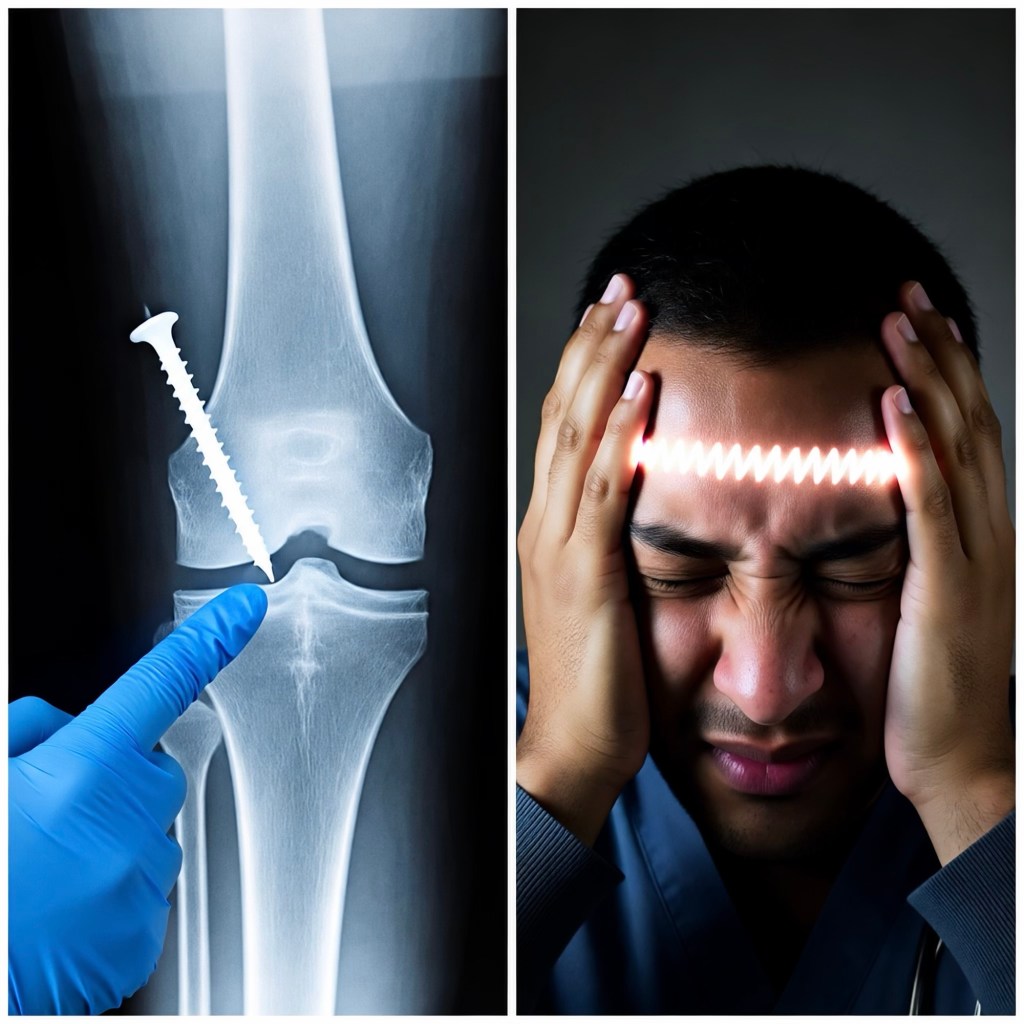
The X-ray said it all.
The doctor didn’t have to take my word for how much pain I was in. He could see the physical damage. There it was, right in front of him.
And perhaps most importantly, I didn’t feel like I was being blamed for it.
That realization hit me hard.
There are no X-rays that show a migraine.
There is no blood test that can simply prove what someone with migraine disease experiences.
There is no picture that says, Yes, this person is in pain.
The lack of visible evidence can make diagnosis and treatment incredibly difficult.
And migraine doesn’t always look the same, either.
Some days it creeps in slowly.
Other days, it takes only a few steps before—wham!—you’re suddenly in the middle of it.
Over the years, I learned how to cope with that uncertainty. I learned how to document my symptoms, track my attacks, change my diet, adjust my activities, and bring people with me who could help tell my story.
Without even realizing it, I transferred all of those survival skills to my hips.
The Invisible Work of Being a Patient
People don’t always understand the emotional and mental hurdles that come with living with an invisible disease.
We don’t just have to manage the disease itself.
Sometimes, we also have to manage the process of convincing someone else that the disease is real.
We walk into appointments carrying diaries and logs.
We remember dates, symptoms, medications, triggers and treatments.
We bring care partners who can say, “I saw it, too.”
We become our own historians.
Our own advocates.
Our own evidence.
Because when there is no X-ray, no scan, no obvious physical sign pointing to the source of our pain, we often feel like we have to become the proof.
My orthopedic experience taught me something I hadn’t fully understood before:
There is an enormous difference between being treated for pain and being believed about pain.
For once, I didn’t have to walk into the doctor’s office ready for battle.
The X-ray had already told my story.
And after years of living with chronic migraine, there was something incredibly powerful about finally having a picture that said:
I believe you.


Leave a Reply